
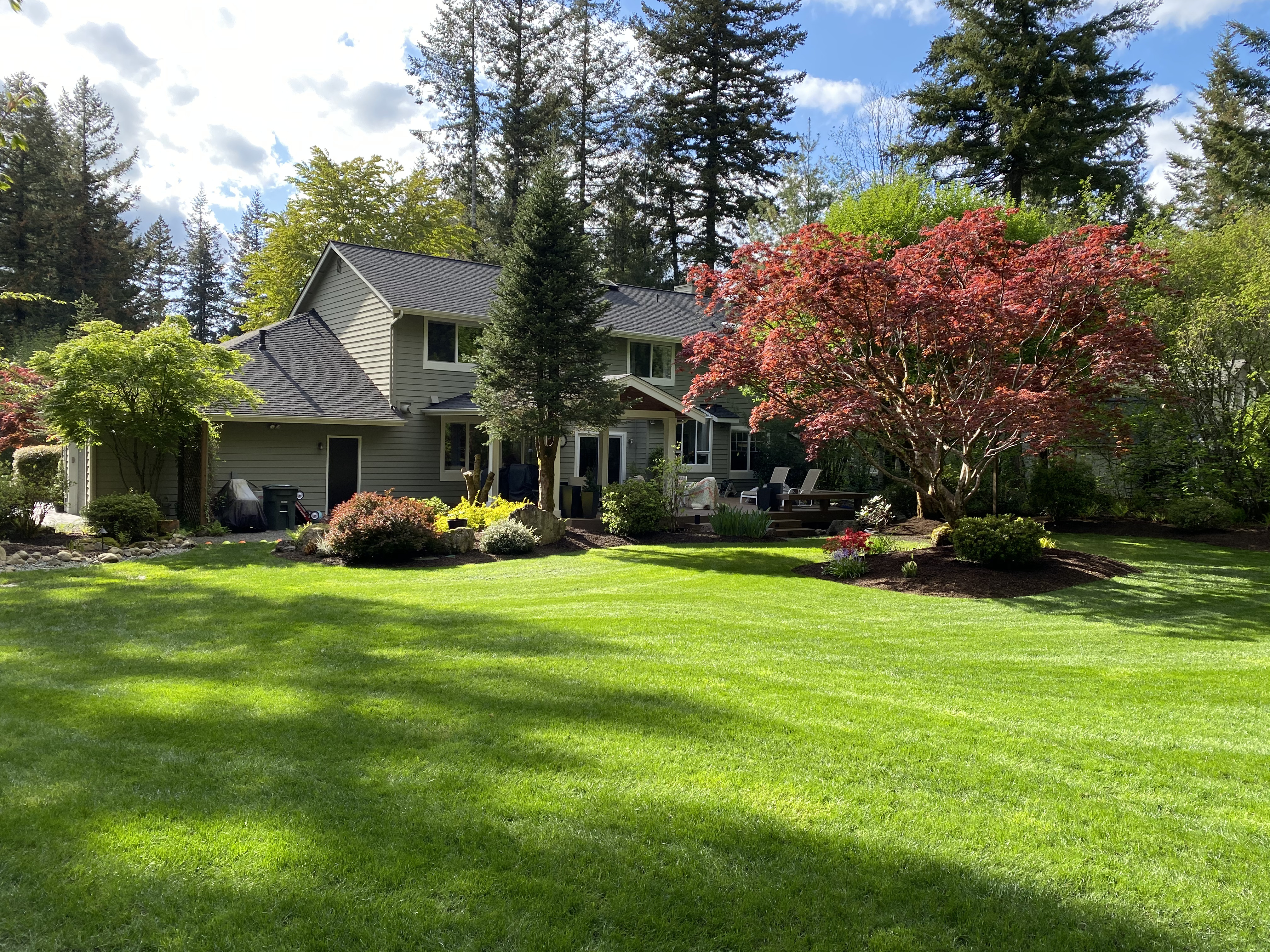
How Much Does a Full Landscape Renovation Cost in the Seattle Area?
One of the most common questions homeowners in the Seattle area bring to a first consultation: what's this going to cost? It's a reasonable question, and the honest answer — it depends — is frustrating but accurate. What follows is the most useful breakdown of landscape renovation costs in this market without manufactured optimism.
What Drives Cost in This Market
Labor in the greater Seattle area is higher than most of the country, and it's been rising. Material costs — particularly concrete, gravel, and plant material — reflect both supply chain conditions and the weight and logistics of delivery to properties that often have limited access.
Site conditions here add cost in ways that don't always show up on initial estimates: clay soil that needs to be removed rather than graded, high water tables that complicate drainage work, steep slopes that require additional equipment or shoring, and proximity to critical areas that trigger permit requirements.
The numbers below reflect realistic 2025 pricing for quality work in King and Snohomish counties — not the lowest available bid.
"In the Seattle market, the gap between a $15,000 and a $40,000 landscape renovation is often less about square footage than about what's under the surface. Drainage, grading, and soil remediation are what drive cost — not plants."
Cost by Project Type
Lawn Renovation
Removing an existing lawn, amending soil, regrading, and installing sod or seed: $3–$6 per square foot depending on site access, grading complexity, and whether sod or seed is used. A 2,000 square foot lawn renovation typically runs $6,000–$12,000 all-in.
Drainage and Grading
French drain installation: $2,500–$6,000 for a basic system on a residential lot, more for complex sites or long runs. Full regrading of a backyard with soil removal and compaction: $5,000–$15,000 depending on volume and truck access. Catch basin and pipe work: $1,500–$4,000 per installation point. These numbers can feel high until you're comparing them to the cost of repairing a water-damaged foundation.
Hardscape: Patios and Walkways
Concrete patio, basic: $10–$15 per square foot installed. Paver patio, standard concrete pavers: $15–$25 per square foot. Natural stone: $25–$45+ per square foot. For a 400 square foot patio: $4,000–$18,000 depending on material. Walkways typically run slightly lower per square foot due to simpler layout and lower material volume.
Retaining Walls
Concrete block walls: $30–$55 per square foot of face area. Natural stone or boulder walls: $45–$90+ per square foot. Engineering and permitting for walls over four feet adds cost and time. A 40-foot wall at three feet high (120 square feet face) in block: $3,600–$6,600 before any permitting.
Planting
Planting costs are highly variable depending on plant size and quantity. Budget $8–$15 per square foot for a fully planted bed including soil amendment, plants, and installation. Feature trees run $300–$2,000+ installed depending on size. Lawn plus planting beds on a full backyard renovation: $15,000–$35,000 is a realistic range for a standard Eastside lot.
Full Landscape Renovation (Typical Seattle Eastside Backyard)
A complete backyard renovation — grading, drainage, patio, lawn, planting beds, irrigation, and lighting — on a 5,000–8,000 square foot lot typically runs $40,000–$90,000 in this market. That number surprises people. It shouldn't, because it reflects labor, materials, drainage infrastructure, and plant material that will last 20–30 years with basic maintenance.
How to Budget Intelligently
Phase the work. Grading and drainage come first — they're the infrastructure everything else sits on. Hardscape second. Planting last, because you want the grades and drainage confirmed before you put expensive plant material in the ground.
Get three bids, but don't weight them equally. Understand what each bid includes and excludes before comparing numbers. A $30,000 bid that doesn't include drainage remediation isn't cheaper than a $40,000 bid that does.
The Bottom Line
Landscape renovations in Seattle are a meaningful investment. The properties that hold their value and look good at year ten are the ones where the drainage and grading were done right first, and the planting and hardscape followed on a solid foundation. Spend the money in the right order, and it pays for itself in both function and property value.