
The Outdoor Space Your Family Will Actually Use This Summer
At some point in late spring, the calculation shifts. The drainage work is either done or scheduled. The lawn is recovering. The structural problems that showed themselves over winter have been assessed. The yard is no longer a list of things wrong with it.
What it becomes next depends on a different set of decisions — not about what needs to be fixed, but about what the space should actually do from June through September.
Pacific Northwest summers are short and genuinely good. Long evenings, comfortable temperatures, the particular quality of light in July that makes being outside feel worth staying for. The homes that make the most of those months are rarely the ones with the most elaborate outdoor setups. They're the ones where getting outside is easy and staying outside is comfortable. That outcome is more deliberate than it looks.
The patio is the foundation, and size is the decision that matters most
Every functional outdoor living space is organized around a defined hardscape area. This is where furniture lives, where people gather, where the experience is centered. Everything else — the fire feature, the privacy screening, the lighting — organizes itself around this surface.
The decision that homeowners most consistently wish they'd made differently is size. A patio that's too small for how the space actually gets used is the hardest thing to change after the fact. It requires removing finished hardscape, regrading the base, and extending the surface — work that costs significantly more than getting the size right during the original installation.
A basic dining and seating setup needs a minimum of twelve by sixteen feet to not feel crowded. If regular entertaining is part of the picture, that number goes up. The way to arrive at the right size is to think about the specific configuration of furniture that will actually be out there and add clearance for people to move around it comfortably. Most people underestimate this by thirty to forty percent when they're planning from a drawing rather than standing in the space.
Paver patios handle the Pacific Northwest's wet winters and dry summers better than poured concrete over time. Individual pavers can be releveled if the base shifts. When a tree root heaves a section, the repair is localized and largely invisible. The same event on a poured concrete surface produces a crack that doesn't disappear. Natural stone — bluestone, basalt, quartzite — is the premium option and holds up well in this climate. The range of available materials means the surface can match the character of almost any home without forcing an aesthetic choice.
A heat source is what extends the season, not what completes a design
The shoulder seasons here are the months most people lose. May evenings are still cool enough to send people inside by eight. September drops fast after sunset. The families who use their outdoor spaces from May through October almost always have a heat source. The ones who don't tend to use the space from late June through August and call it a summer.
A built-in fire pit integrated into the patio surface serves this function better than a portable unit in most situations. A structure built from matching paver material or natural stone, with a gas insert or designed for wood burning, becomes part of the outdoor space rather than something placed in it. It lasts as long as the patio, doesn't require storage, and works as a focal point that draws people toward the seating area rather than away from it.
Gas fire features require a line run to the patio. If hardscape work is already planned, adding that line during construction is a modest cost. Adding it after the fact means opening finished surfaces. The same is true of any utility that serves the outdoor space — electrical for lighting, water for an outdoor kitchen. Planning for these during the hardscape phase costs a fraction of retrofitting them later.
Privacy determines how much the space actually gets used
A well-built patio that feels exposed to neighbors on multiple sides gets used less than it should. Privacy is the element homeowners most consistently wish they had addressed during construction rather than after, and it's one of the most common reasons a finished outdoor space underperforms relative to what was spent on it.
The options cover a range of approaches. Cedar fencing and board-on-board privacy panels are direct and effective. A pergola structure with climbing plants — climbing hydrangea, native honeysuckle, wisteria where the structure can support it — creates a softer enclosure that also adds an overhead element to the space. Arborvitae or Western red cedar planted in a line provides screening that improves over time and integrates naturally into a Northwest landscape without the visual weight of a fence.
The combination that tends to work best for outdoor spaces that need both overhead definition and side screening is a pergola with planted screening on the exposed sides. The result is an outdoor room — enclosed enough to feel like a destination, open enough to not feel boxed in. That quality of enclosure is what makes people want to go outside in the first place and stay longer when they do.
Lighting is what determines when the space stops being used
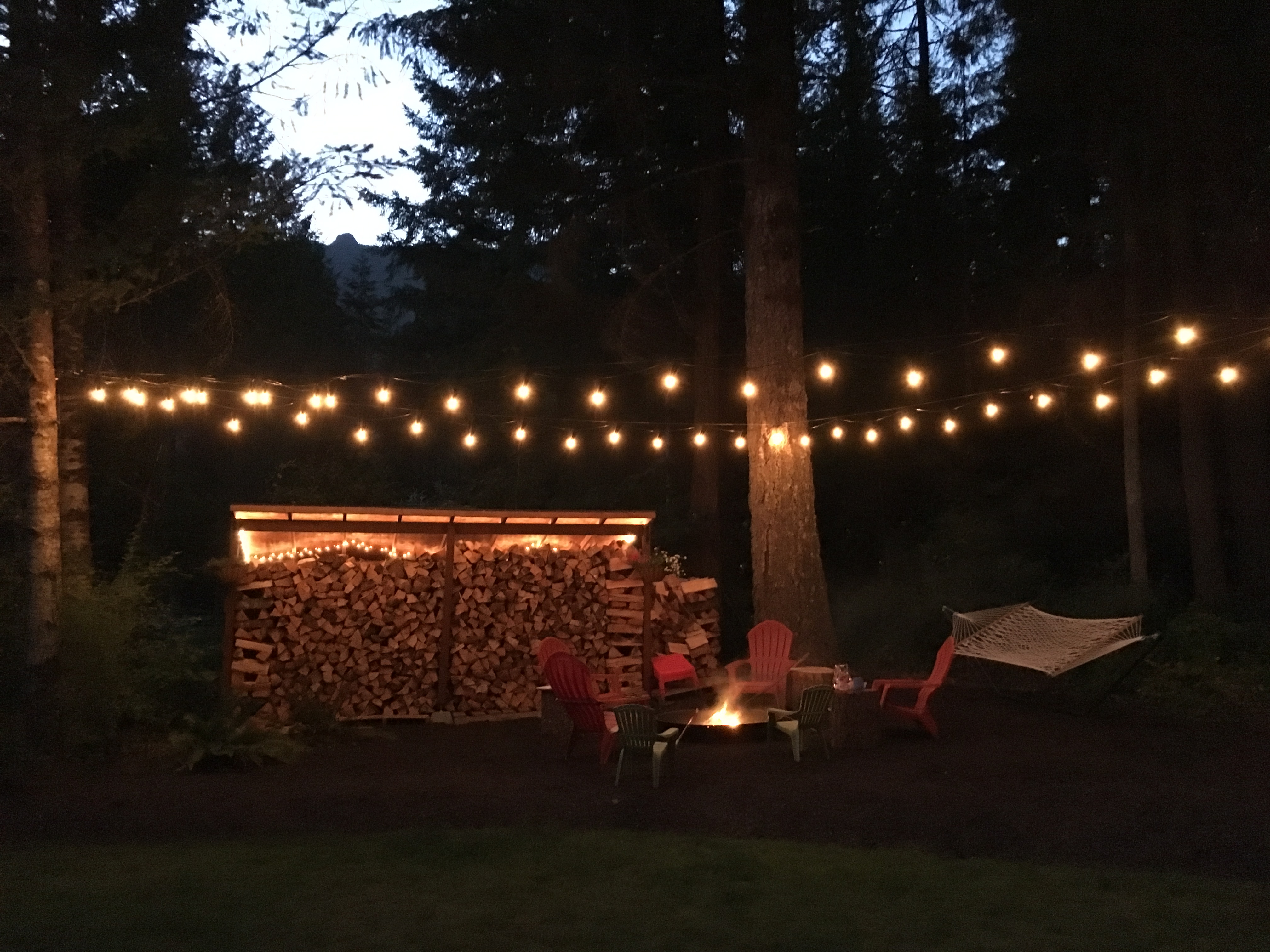
A yard that goes dark at eight stops being used at eight. In June, that's several hours before the evening is actually over. Outdoor lighting is the element that changes how late the space stays useful, and it's consistently underinvested relative to how much it affects daily use.
The installation that serves most outdoor living spaces well doesn't require elaborate design. Downlights integrated into a pergola structure or mounted on the house provide functional ambient light over the seating area. Path lights along a walkway extend usability and improve safety. A few well-placed ground fixtures uplighting a significant tree or architectural feature change how the property reads from inside the house after dark.
Wire runs and transformer placement are easier to integrate during hardscape construction than after. If lighting is part of the eventual plan, roughing it in during the patio installation costs almost nothing relative to cutting into finished work later.
The system is the point
The outdoor spaces that work well are the ones where the components were considered as a system from the start rather than added incrementally over several years. A pergola planned during patio construction is integrated, proportional, and structurally connected to the overall design. One added to a finished patio five years later is more expensive and always reads as exactly what it is.
The sequence that produces a space worth using starts with getting the patio size right, because it's the hardest decision to reverse. Then the heat source, because that's what determines whether the shoulder seasons are part of the summer or not. Privacy and lighting can be phased in after that without compromising the result, though the utility runs for both should be planned from the start.
The families outside every evening this summer didn't necessarily spend more than anyone else. They made the right decisions in the right order, and the space works because of it.