
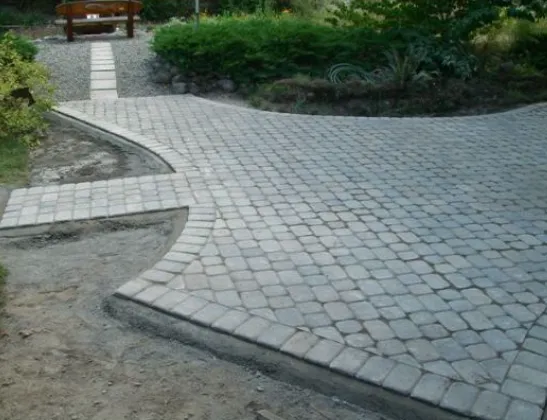
Paver Patios vs. Concrete: Which Is Right for Your Seattle Eastside Home?
There's a reasonable objection to installing an irrigation system in the Pacific Northwest: it rains here. A lot. So why spend money automating something the sky handles half the year?
The answer is the other half of the year — and what happens to expensive landscaping when that transition isn't managed well.
The Problem with Pacific Northwest Summers
Western Washington's wet season ends abruptly. By late June, rainfall drops sharply and stays low through September. Average July rainfall in the Seattle area is under an inch. Newly installed plantings, lawns, and established trees under drought stress don't send distress signals until the damage is done — and by then, you're replacing plants rather than watering them.
Most landscaping losses in this region aren't from bad winters. They're from dry summers on properties that didn't have consistent irrigation. The investment in plants and installation is the expensive part; keeping them alive costs a fraction of that — but only if you're actually doing it.
"In Western Washington, the risk isn't overwatering — it's the July drought that catches people off guard. A properly zoned irrigation system applies water where plants need it, when they need it, without anyone having to remember."
What a Well-Designed System Actually Does
The operative word is well-designed. A system that applies the same amount of water to a lawn, a shrub bed, and a drip zone for newly planted trees isn't serving any of them well. Proper irrigation design zones the property by plant type, sun exposure, and soil type — and runs each zone on a schedule matched to its actual water demand.
Modern controllers go further. Smart irrigation controllers pull local weather data and skip cycles after rain events. They adjust run times based on evapotranspiration rates. Some connect to soil sensors. Used correctly, a smart controller can reduce water use by 30–50% compared to a fixed schedule.
The Math on ROI
A typical residential irrigation system for a 5,000–8,000 square foot lot in the Redmond area runs $3,500–$7,000 installed, depending on zones, site conditions, and controller type. That's the one-time cost.
The return comes from three places: lower water bills when the system is properly programmed (vs. hose-dragging which tends to over-water), avoided plant replacement costs, and lawn health that doesn't require reseeding every two years from summer burnout. On a landscaped property worth $20,000–$40,000 in plantings and hardscape, protecting that investment with a $5,000 irrigation system is a straightforward calculation.
What to Look For in an Installation
Zone design matters most. Your installer should walk the property and map out zones based on actual plant needs — not just square footage. Rotary heads for turf, fixed spray heads for dense planting beds, drip lines for trees and shrubs. Each has different precipitation rates, and mixing them in a single zone leads to under- and over-watering simultaneously.
Backflow prevention is required by code in most Washington jurisdictions. Make sure it's included. And ask specifically about winterization — the system needs to be blown out before freezing temperatures arrive, and that service should be easy to schedule.
Signs Your Existing System Isn't Working
Wet spots near heads after a run suggest heads are spraying onto impermeable surfaces or zones are overlapping. Dry patches despite running suggest head spacing issues or a clogged nozzle. Brown edges on a lawn in summer usually mean the outermost heads aren't reaching — a coverage gap, not a watering frequency problem.
Most irrigation systems that are underperforming just need an audit and adjustment, not replacement. If yours hasn't been looked at in three years, start there.
The Bottom Line
An irrigation system isn't a luxury for properties in Western Washington — it's maintenance infrastructure. The dry season is real, it comes every year, and the landscapes that come out of summer healthy are the ones with consistent water applied intelligently.
Next week: Outdoor lighting ideas that add security and curb appeal — and why the right placement matters more than the fixture.