How Much Does a French Drain Cost on the Eastside?
Water pooling on the lawn, a soggy side yard or runoff crossing a walkway can make part of your property difficult to use. The starting point is understanding where that water comes from, how it moves and how long it stays. That's also where an honest price starts. This page is about yard and landscape French drains, not basement waterproofing.
Book a free site visitWhat changes the cost of a French drain
This is a cost guide for homeowners in North Bend, Snoqualmie, Fall City, Preston, Issaquah, Sammamish, Bellevue, Maple Valley, Covington, Duvall and Carnation who have searched for French drain cost and found numbers that don't agree. It goes with our Yard Drainage & Grading page, which covers how we design and build drainage. Here we focus on what moves the price, and on when you may not need a French drain at all.
Jobs vary a lot. Two drains of the same length can cost very different amounts, depending on what's in the ground, how we get to it and where the water ends up. A meaningful price depends on a defined, site-specific scope. Online averages often mix yard drains with basement or footing work, so they rarely match an Eastside yard.
Typical Project Ranges
Price varies by depth required, root interference, and disposal of excavated clay.
Per system. Depends on distance to discharge point and surface restoration needed.
Our clay soils don't absorb water well. Proper drainage often requires moving water completely off the problem area, not just putting it underground.
Final price depends on how complex the project is, including trench depth, soil and rock, access for equipment, where the water can drain to, and restoring your yard or hardscape afterward.
A straightforward job sits toward the lower end of these ranges: a shallow run, few roots, little clay to haul away and a discharge point close by. More complex work moves up: a deeper trench, heavy roots, a lot of clay disposal, a long run to the discharge point or more surface restoration.
The visit is free, and you get a written estimate for your yard. Or call (425) 490-9696.
What drives the price
- Length and depthThe longer the run and the deeper the trench, the more digging, pipe and rock the job needs.
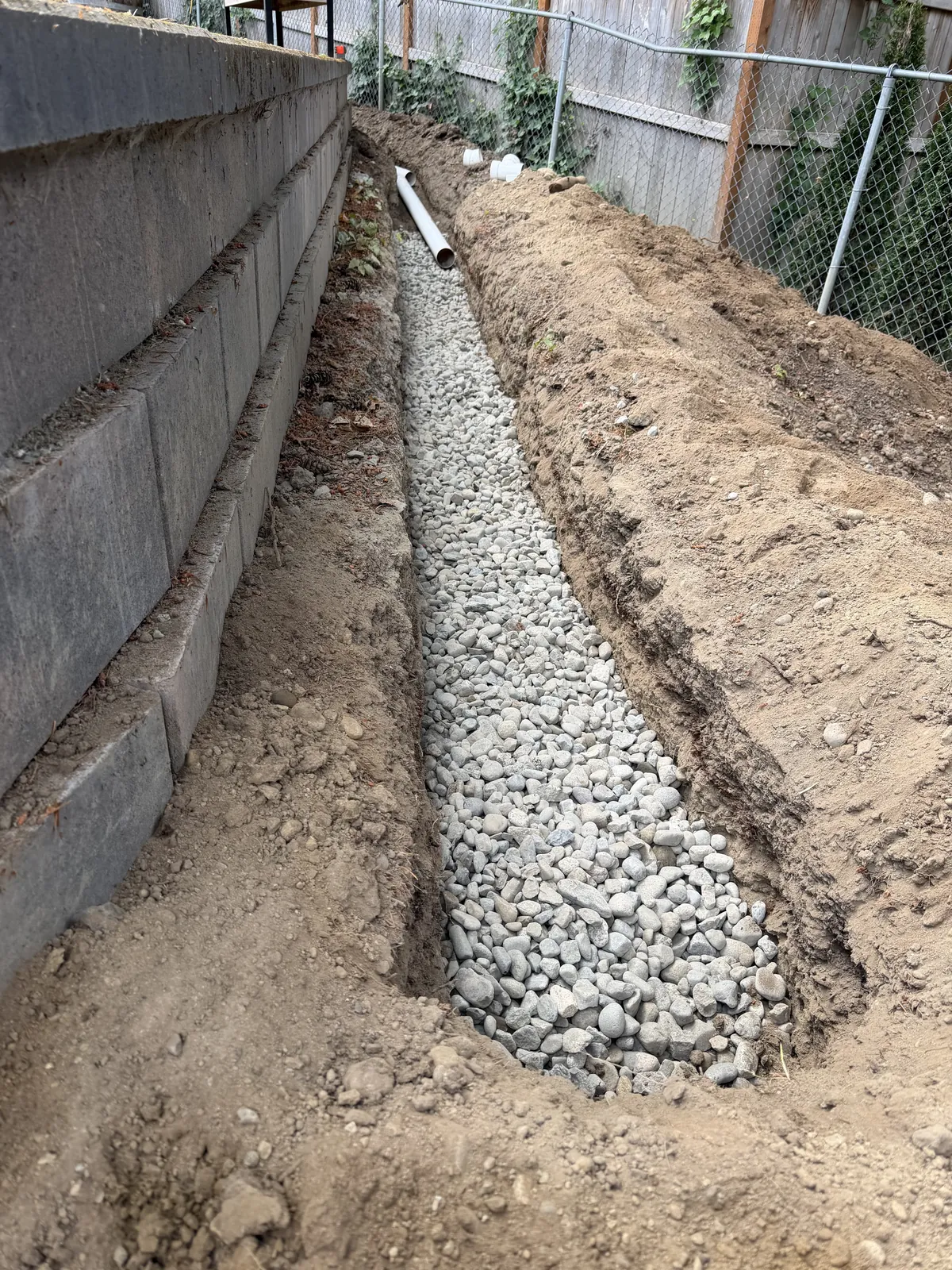
- Glacial till and clayMuch of the Eastside sits on clay and glacial till. It digs slower than loose soil and can't go back in the trench as backfill, so clean drain rock takes its place.
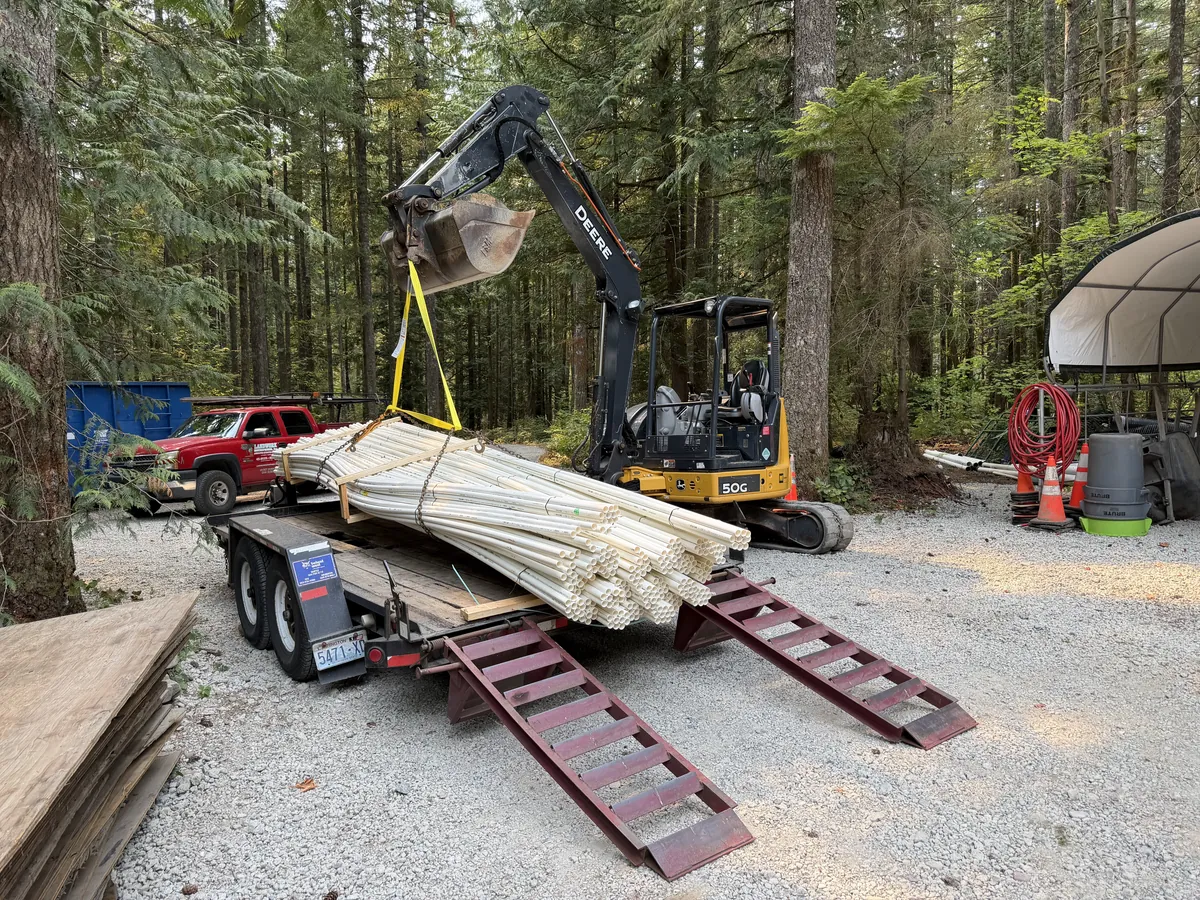
- AccessA compact machine trenches much faster than a crew with shovels. A narrow side yard or a tight gate means more hand digging, plus protecting fences, lawn and driveway along the way.
- Where the water goesEvery drain needs an outlet: daylight at a lower spot, a storm tie-in, a dry well, a catch basin or a sump. A sump or pump adds a lot.
- MaterialsThe type of pipe, rock and fabric all show up in the price.
- Haul-offClay that comes out of the trench has to go somewhere. Haul-off isn't free, and when a job needs it, it's built into the quote.
- Lawn restorationSod, reseeding and similar repair after the trench is closed aren't free either. When they're needed, they're built into the quote.
- Wet-season conditionsWinter work can mean mud, ground mats and erosion control to protect the yard.
- Tree rootsFirs and cedars send roots a long way. Cutting through them slows the trench and can change the route.
- Utility locatesBuried lines get marked before any digging, and the drain route works around them.
Do you even need a French drain?
We don't start with a product. We start with the water. A French drain is not automatically the answer to standing water, and sometimes the right fix is simpler.
French drain, catch basin, or regrading?
French drains can collect water moving through soil; catch basins collect surface water; grading changes how water moves across the ground. Some properties need a combination. None is a universal answer to a wet yard. If water sits on top after a storm, a catch basin or regrading may do more than a buried drain. If the ground stays saturated below the surface, a French drain may be the right tool.
Downspouts and outlets
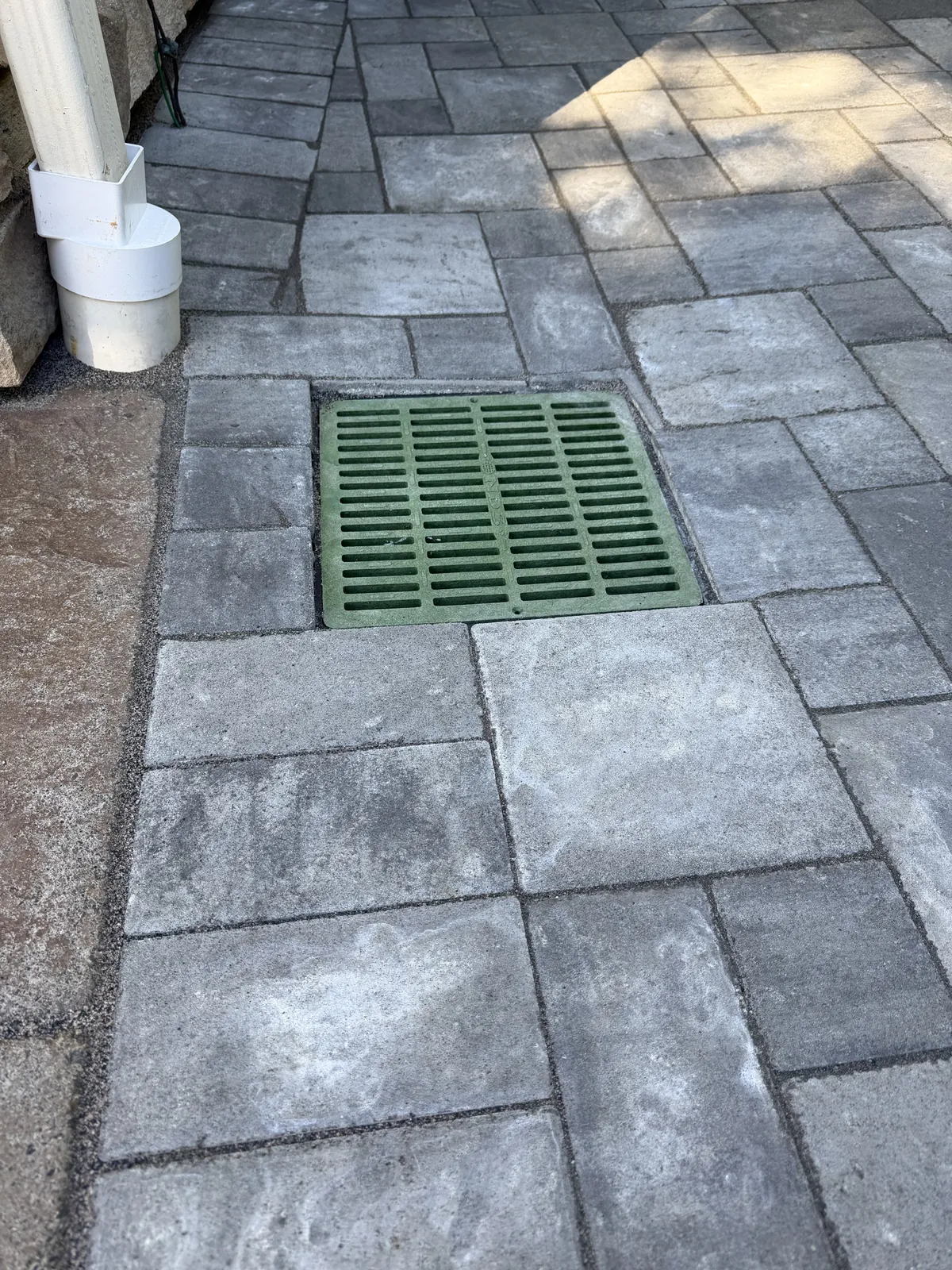
Roof runoff can concentrate water in one area, and sometimes the soggy spot is simply where a downspout empties. Roof water belongs in solid pipe, not perforated pipe. A dry well can be the wrong outlet in tight clay, which is why we look at the soil first. A drainage proposal needs an appropriate discharge or infiltration approach, not simply a pipe pointing at a neighbor or the street.
When a shallow corrugated patch fails
Many wet yards already have a drain that stopped working, often a shallow trench with corrugated pipe. Doing it right usually means deeper trenching, smooth-wall PVC rather than corrugated pipe, washed drain rock and filter fabric. We wrote more about this in The True Cost of Builder-Grade Drainage.
Yard drains are not the same job as a basement system
Some of the numbers online are for interior basement drain tile or deep footing drains. Those are different jobs from a yard drain, with different costs.
Our drainage work is yard drainage only, not basement waterproofing: French drains, catch basins, regrading and downspout lines that move water across and away from the problem area. That can include a French drain along the outside of a foundation when it's part of the yard work. When you compare prices, check that each number is for the same kind of job.
When to install a French drain, including during the rainy season
We work year-round, straight through winter. Drainage is often best diagnosed in the wet season, when you can see where water collects and how it moves, so fall and winter are a great time for a site visit. Some paver work that goes with a drainage project may wait for a dry spell, and we schedule around the weather.
Full visit and timing details are on our Yard Drainage & Grading page.
How the work gets done
It starts with a free site visit. We walk the property with you, look at where water collects and where it's coming from, and talk through the options. After the visit, we send a written estimate, and we aim to get it to you within a few days.
The same team handles the work from the site visit through cleanup. Most of our projects run several days to a few weeks, and you get a timeline with the estimate. Permits are sometimes needed, so check with your city or King County before work starts.
We own the equipment we use on drainage jobs: one mini excavator, a second excavator, two skid steers and two dump trucks. That lets us bring the right machine for the yard:
- Clean trenching, with less hand digging and less disruption to the yard.
- Hauling excavated clay away with our own dump trucks.
- Moving drain rock to where it's needed.
If drainage is part of a bigger project, such as a full yard renovation, a paver patio or a retaining wall, we build it into that work so everything starts on a base that sheds water the right way.
Photos and project examples
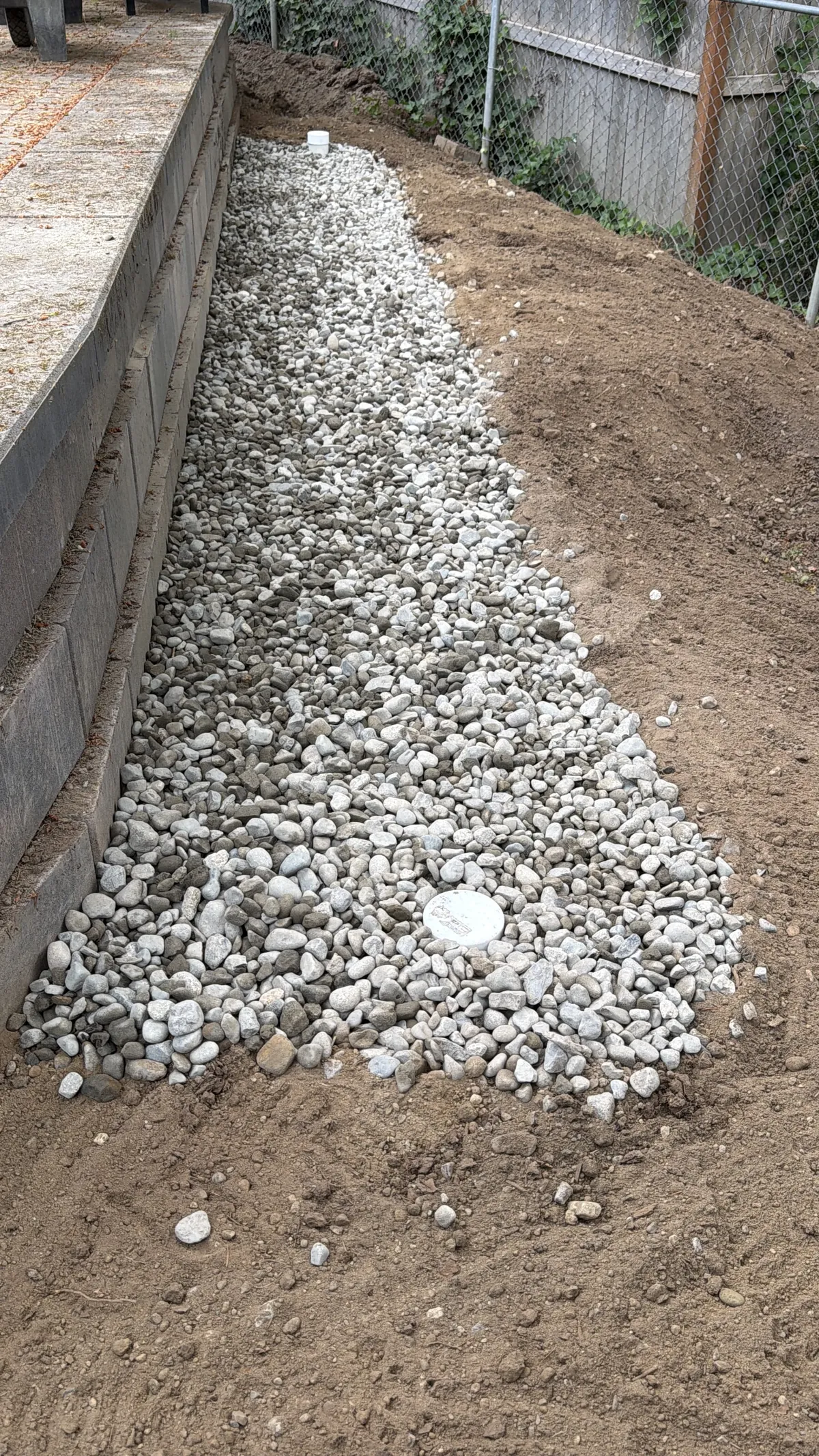
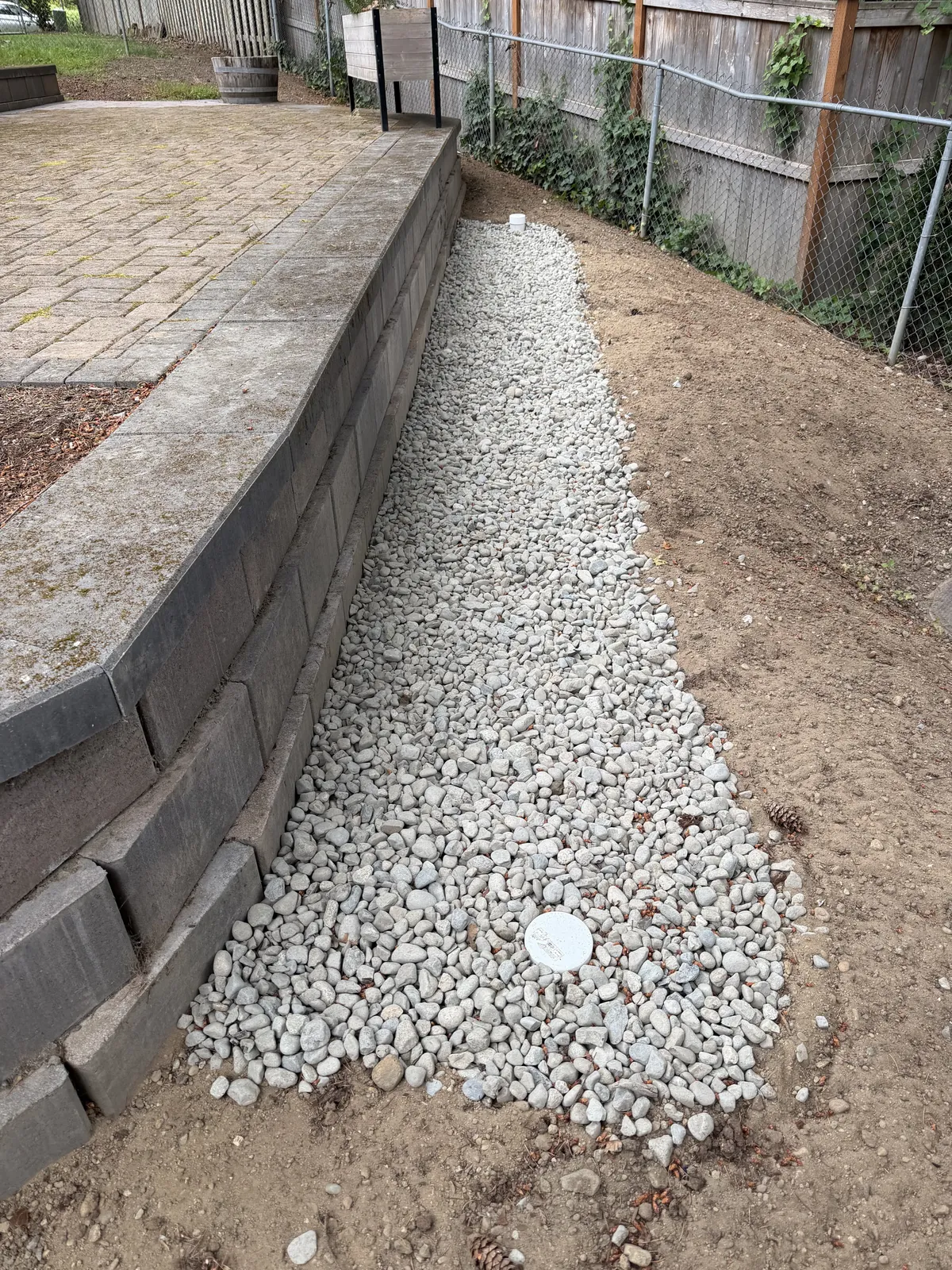
A finished French drain in the Snoqualmie Valley: drain rock along a block wall, with a cleanout cap at the surface. Finished photos show the work, not the original water problem.
French drain cost questions, answered directly
What does French drain installation cost?
Cost depends on proposed length and depth, access, excavation conditions, collection and discharge approach, and restoration. Jobs vary a lot. Material type (pipe, rock, fabric), haul-off of excavated material, and lawn restoration (sod, reseeding, and similar) all change the quote. Haul-off and restoration are not free; they are built into the quote when needed. Landwork's typical range for French drains is $25-$75 per linear foot, varying with depth, roots, and clay disposal, and for catch basins plus piping it is $1,500-$4,000+ per system, varying with distance to discharge and surface restoration. Final price depends on how complex the project is, including trench depth, soil and rock, access for equipment, where the water can drain to, and restoring your yard or hardscape afterward. Eastside clay often means moving the water off the problem area. A meaningful price requires a defined, site-specific scope. Book a free site visit to discuss the work.
Water is pooling in my yard. What should I do first?
Document the pattern safely: where it collects, what happens during rain, and how long it remains afterward. Include a wide photo and any visible roof-runoff or slope connections. Ask for an assessment before choosing a drain or changing the grade. If water is threatening the house or creating a safety hazard, deal with that first and call for emergency help if needed.
Do I need a French drain or a surface drain?
It depends on whether the issue is water moving through soil, surface runoff, or both. A site assessment should consider water source, slopes, and outlet before selecting a system. A French drain is not automatically the answer to standing water.
Can downspouts contribute to a soggy yard?
Roof runoff can concentrate water in one area. An assessment should consider where downspouts discharge and whether existing connections function. Any rerouting needs a proper destination, not a new wet spot for a neighbor.
Can drainage work stop river flooding?
No yard drainage project can promise protection from a river flood. We'll help sort out whether you're dealing with floodplain conditions, high groundwater or ordinary surface runoff before talking scope.
Do I need permission to change yard drainage?
Requirements depend on location and proposed work. Check with the city or King County as applicable before excavation or changing a discharge connection. Slopes, critical areas, and floodplains can introduce additional constraints.
What photos are useful before a drainage visit?
A wide view of the affected area, a closer view of water collecting, and the surrounding slope or downspout can help. Note when each photo was taken and how long water remained. Take photos only from a safe place. Installation or finished-yard photos do not substitute for evidence of the original problem.
When is the best time, and how long does it take?
Landwork works year-round, and drainage is often best diagnosed in the wet season, when you can see where water collects and how it moves. Most of our projects run several days to a few weeks. A timeline comes with the written estimate. See the drainage and grading page for the full visit and timing details.
More questions? See our FAQ or call (425) 490-9696.
Start with a free site visit
We'll walk your property, look at where the water is going, and send you a written estimate for your yard.