Yard Drainage & Grading for North Bend, Issaquah and the Eastside
Standing water in the lawn every November. A soggy strip along the side of the house that never dries out. A slope that sends mud across the patio every time it pours. If any of that sounds like your yard, the problem usually isn't the lawn or the plants. It's where the water goes and how the ground is shaped.
Landwork Enterprises designs and builds yard drainage and grading for homes across the Snoqualmie Valley, from our home base in North Bend to Snoqualmie, Fall City, Carnation and Duvall, and in Issaquah and Sammamish. We also take on a limited number of projects in Maple Valley, Covington and the Issaquah side of Renton. We find out where your water is coming from, figure out where it needs to go, and build a fix that works through a full wet season.
Book a free site visit or call (425) 490-9696.
Why Eastside yards have drainage problems
Fall and winter here mean long stretches of steady rain. The ground fills up, and once it's saturated, every new storm has nowhere to soak in. Water pools on flat lawns, runs off sloped lots toward the house, and sits in low spots for weeks.
A quick patch or a bag of gravel rarely fixes this for good. The fix has to account for the whole yard.
A few things make it worse:
Drainage solutions we install
Every yard is different, so we don't start with a product. We start with the water. Depending on what we find, the fix may combine several of these:
French drain installation
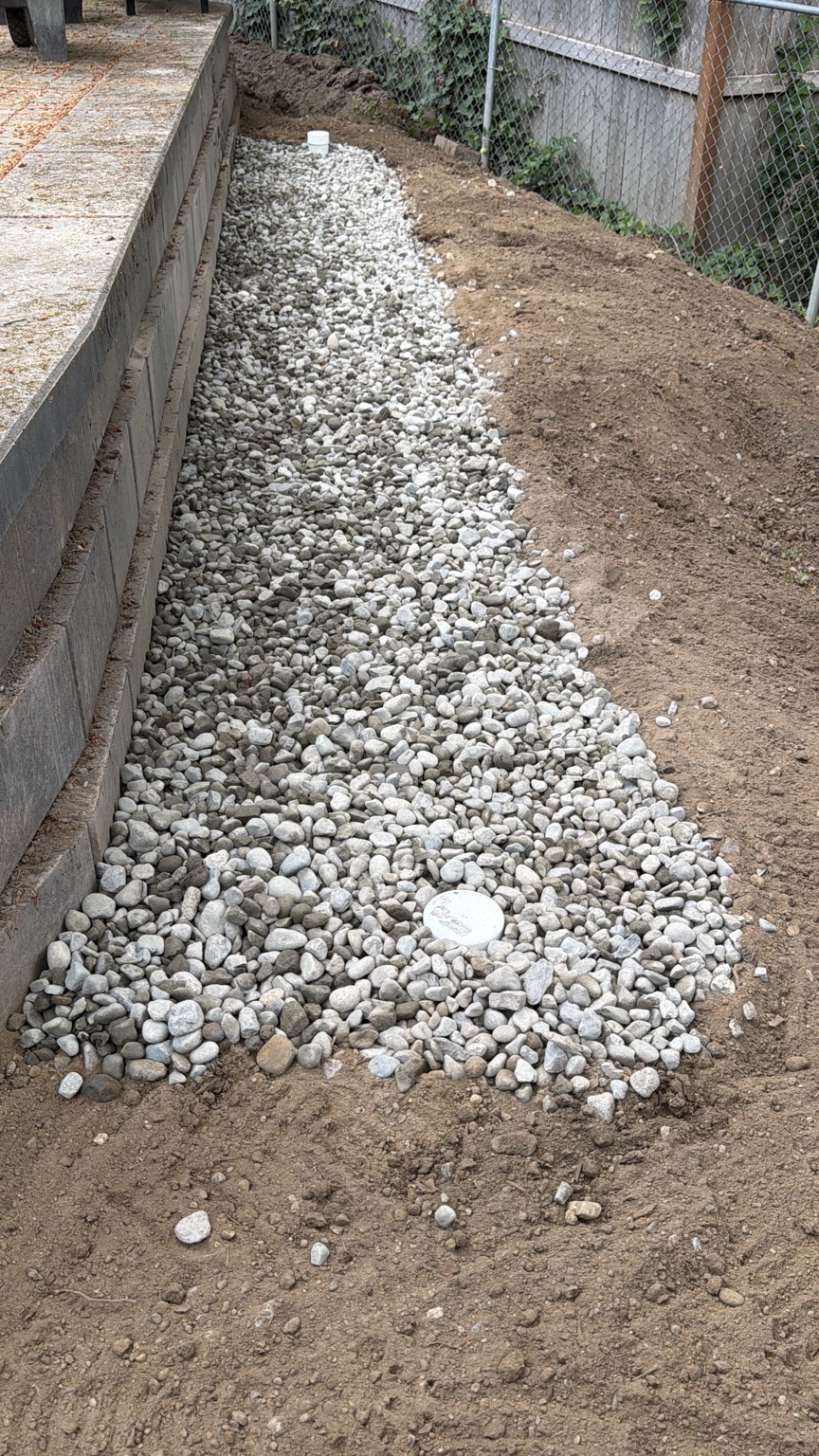
A French drain is a trench lined and filled with drain rock, with perforated pipe at the bottom. It collects water in the soil and carries it to a safe discharge point. French drains work well along foundations, at the bottom of slopes, and across lawns that stay soggy all winter. We plan the route, depth and fall of the pipe so water keeps moving instead of sitting in the trench.
Catch basins
Catch basins collect surface water at low spots, such as the corner of a patio, the bottom of a driveway or a swale in the lawn. They connect to buried pipe that carries the water away. They're a good fit wherever water collects on the surface faster than the ground can absorb it.
Regrading
Sometimes the best drainage fix is the shape of the ground. Regrading reshapes the yard so water flows where you want it: away from the house, toward a drain or into a planted area that can handle it. We often pair regrading with a French drain or catch basins.
Subsurface drains
For lawns and planting beds that stay saturated below the surface, subsurface drain lines pull water out of the root zone so grass and plants can recover.
Downspouts and dry wells
We also tie downspouts into the drainage system and install dry wells where they fit. Whether a dry well is right depends on the soil and how much water the roof and hardscape shed, so we look at the site before recommending one.
Grading and site prep as part of your landscape project
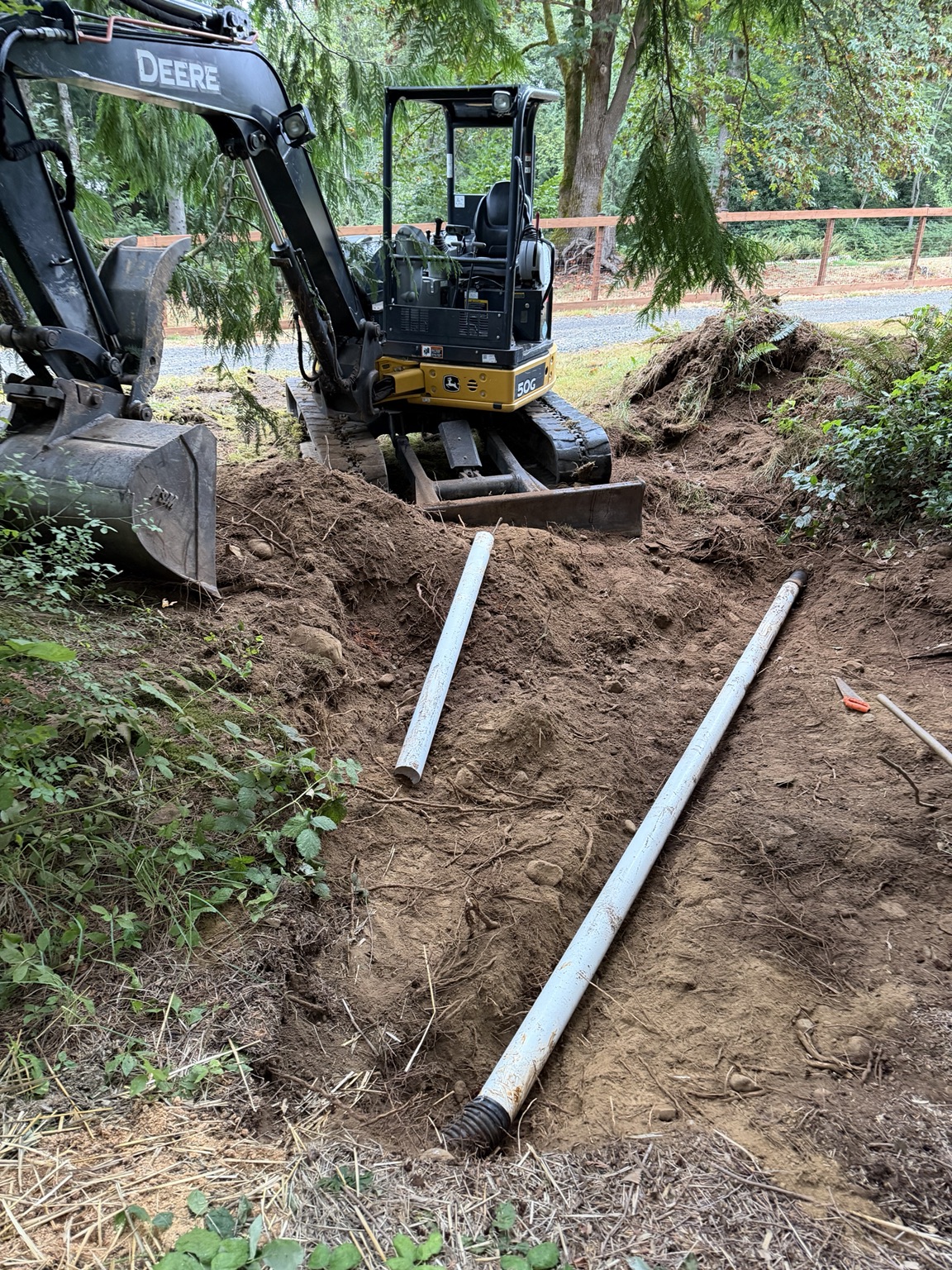
Good drainage starts with good grading. When we build a full yard renovation, a paver patio or a retaining wall, we grade and prep the site first so the new work has the right slopes and a solid, well-drained base. That's how a patio stays flat and a wall stays straight through years of wet winters.
One team from design to finish
The same Landwork team handles your project from the first site visit through the final cleanup. The people who look at your drainage problem are the people who design the fix and build it. Nothing gets lost in a hand-off, and you always know who to talk to. We've been building yards on the Eastside since 1987.
Licensed, bonded & insured. WA License #LANDWEI100P9
Start with a free site visit
The best time to see a drainage problem is when it's happening, so the rainy season is a good time to call. We'll walk your property, look at where the water is going, and talk through options for fixing it.
Drainage & Grading FAQ
When is the best time to install a French drain or fix yard drainage?
We work year-round, straight through winter. Drainage is often best diagnosed and done in the wet season, when the problems show up. Seeing your yard during or right after heavy rain helps us spot exactly where water collects and how it moves, so fall and winter are a great time for a site visit. Some paver work that goes with a drainage project may wait for a dry spell, and we'll schedule around the weather.
How long does a drainage project take?
Every project is different. Small jobs can take a couple of days; larger renovations can run a few weeks to a few months. We'll give you a timeline with your estimate.
What happens at the free site visit?
We walk your property with you, look at where water collects and where it's coming from, check the slopes around the house and yard, and talk through what's going on. Then we explain the options that make sense for your yard. After the visit, we send you a written estimate. We aim to get it to you within a few days, though sometimes it takes a little longer.
What's the process from first call to finished project?
1. You call or book online and we set up a free site visit. 2. We assess the yard and talk through drainage options with you. 3. We put together a plan for your project. We follow up with a written estimate, which we aim to get to you within a few days. 4. The same team that planned the work builds it, from site prep and grading to drains, backfill and cleanup. 5. We walk the finished project with you.
Can you fix drainage as part of a bigger yard renovation?
Yes, and it's often the best time to do it. When drainage and grading are built into a full yard renovation, new patios, walls, lawns and plantings all start on a base that sheds water the right way.
Do I need a permit for drainage work?
Sometimes. Check with your city or King County before work starts.
Questions about your yard? Call (425) 490-9696 or book a free site visit.