Freeze Protection on Irrigation Systems, Even the Ones We Didn't Install
A single hard freeze can damage an irrigation system that wasn't properly winterized. Here's why that risk is real here, even though it's outside what Landwork does.
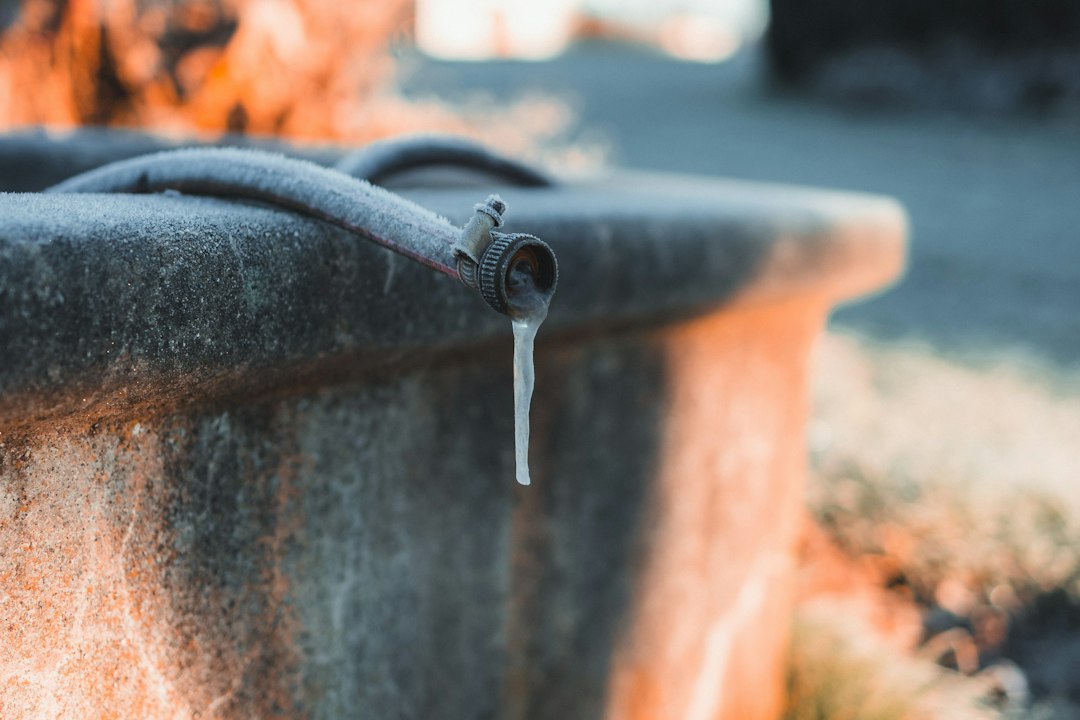
Landwork doesn't service or winterize irrigation systems it didn't install, and that's worth saying plainly rather than dancing around, because it still matters to explain why freeze protection is a genuinely real risk here, even for a system built entirely by someone else, and even in a region that doesn't see harsh winters the way colder parts of the country do.
The physics behind why this matters at all
Irrigation lines hold water by design, and water is one of the few common substances that expands rather than contracts when it freezes. That expansion, inside a rigid pipe or a valve assembly not designed to accommodate it, generates enormous internal pressure with nowhere to go, and something eventually gives, a cracked pipe, a split valve, a damaged backflow prevention device. None of that damage is usually discovered in the moment it happens. It's discovered in spring, when the system gets turned back on for the season and water starts appearing somewhere it clearly shouldn't be, often after the damage has already been sitting unaddressed for months.
This region doesn't see hard freezes often, and that relative mildness is exactly what makes the risk easy to underestimate. A homeowner who skips winterization one year and experiences no problems reasonably concludes that winterization wasn't really necessary that year, and that assumption compounds year over year, right up until a genuinely cold stretch arrives and the system that's gone unwinterized for several seasons finally takes real damage. Mild winters don't eliminate the risk. They just make it easy to go a while without personally experiencing the consequences of skipping the precaution.
Why some parts of a system are more exposed than others
The risk isn't distributed evenly across a system. Backflow preventers, manifold assemblies, and above-ground pipe runs are far more vulnerable than lines buried eighteen inches in the soil, because ambient air temperature drops faster and stays lower than sub-surface ground temperature. The components most expensive to repair or replace are frequently the ones most directly exposed to freezing air.
Draining the lines or blowing them out with compressed air removes the water volume that causes expansion damage. It is a straightforward preventative step, but one that gets neglected precisely because the feedback loop isn't immediate. You don't see the pipe split when it happens; you see it in May when you pressurized the system.