Why Land Clearing Gets Harder, Not Impossible, Once the Rain Starts
Land clearing gets treated as a summer task by default. Here's why fall and winter clearing works, and why it can actually be the better window.
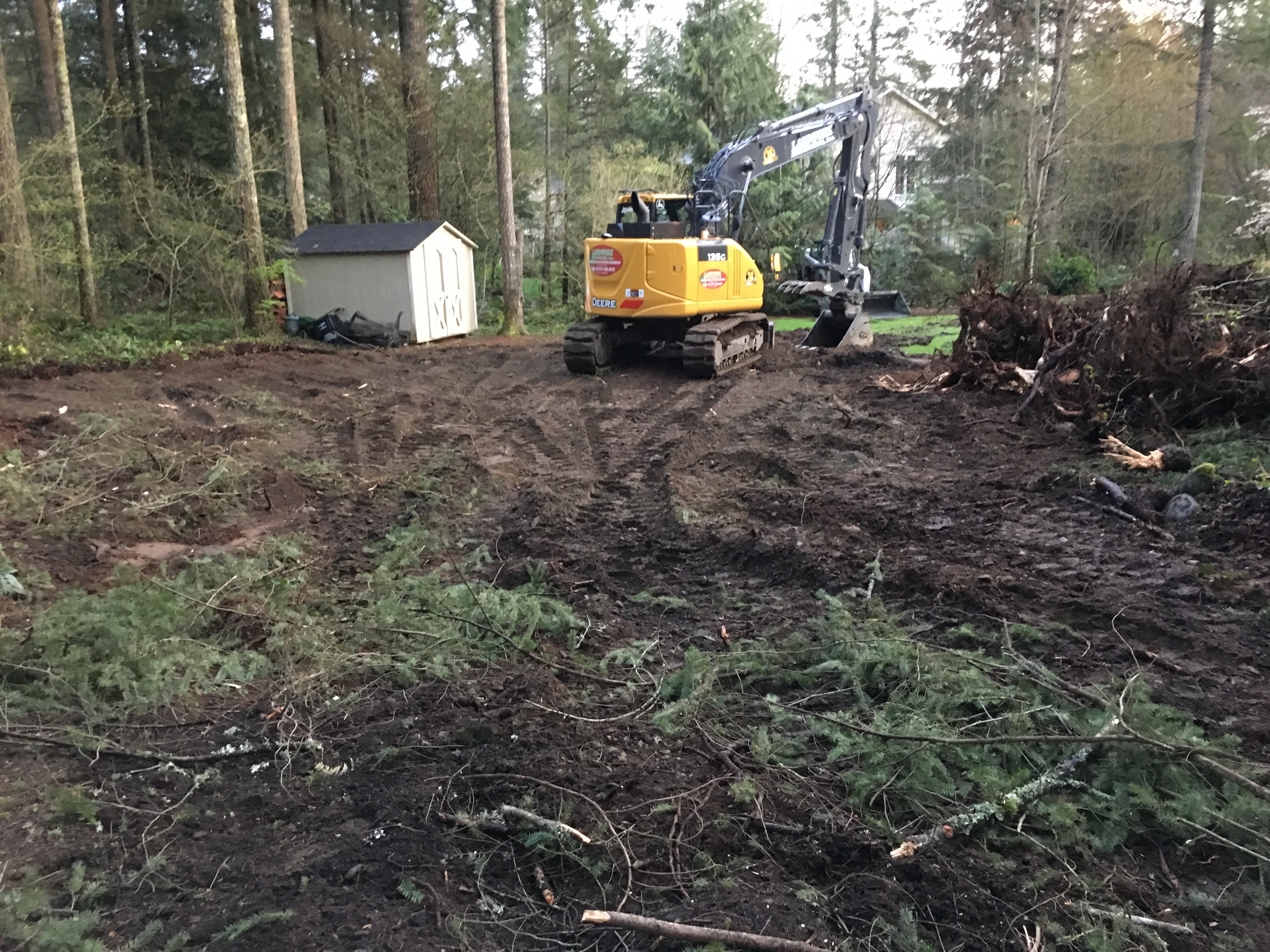
Land clearing gets treated as a summer task by default. The assumption is simple: dry ground makes machinery easier to operate, soil is lighter to move, and work moves faster. That assumption isn't wrong, but it overlooks a critical reality about the Pacific Northwest construction calendar: waiting for dry ground often means losing three to four months of usable project timeline.
The Fall and Winter Advantage
Clearing land during the wet season requires different equipment, altered machine techniques, and careful site management, but it is entirely doable. More importantly, getting brush, stumps, and overgrowth cleared in November or January means that when spring soil dries out enough for foundation work or grading, the site is already prepped and ready to move forward immediately.
Soil Management and Protection
Working in wet conditions requires tracking equipment rather than wheeled machinery to minimize ground compaction. Laying down temporary rock driveways and wood-chip matting preserves access routes without turning the property into a mud pit. With the right site protection plan, wet-season land clearing sets your spring construction up for success.